
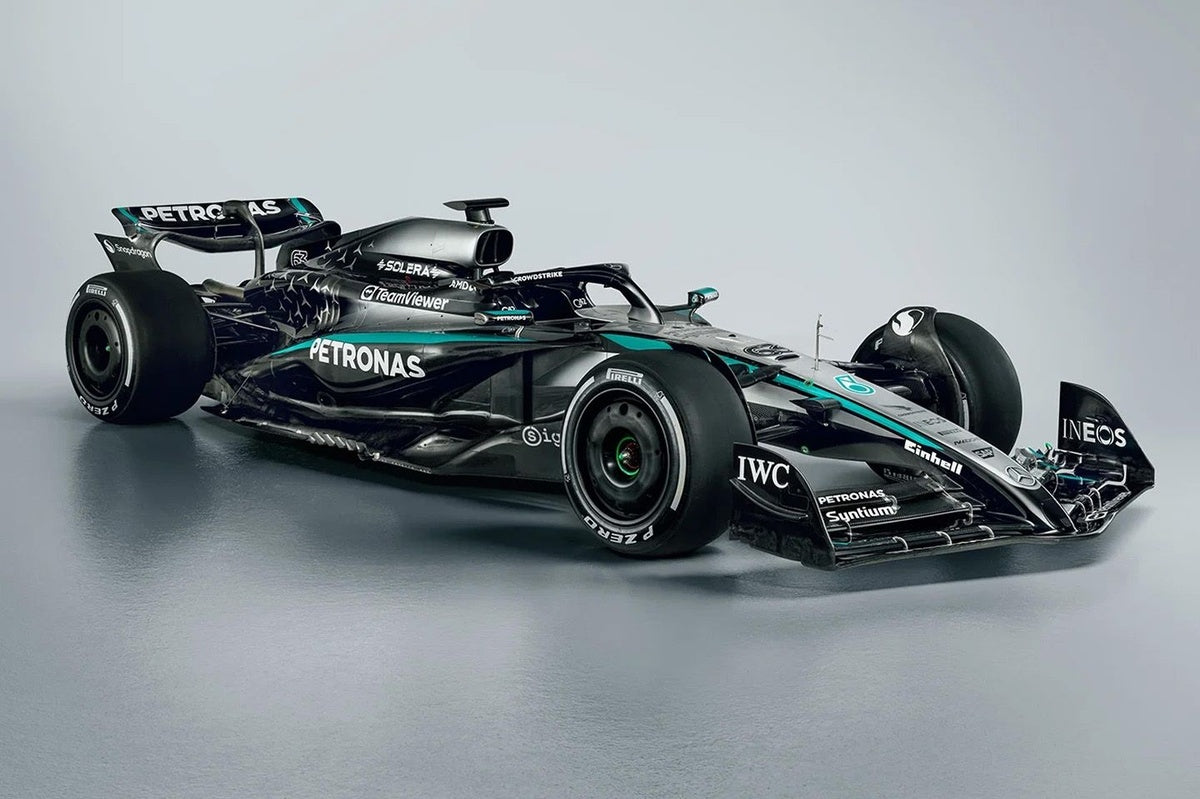
As Formula 1 fans eagerly anticipate the sweeping regulation changes set for 2026, all eyes turn to Mercedes, a team determined to return to the summit of the sport after enduring tricky seasons post-2021. The Silver Arrows’ journey through a tumultuous period has fostered significant introspection within their technical ranks, with lessons learned from previous missteps now shaping their strategic direction for the new era. For a team with such a rich history of dominance, Geneva’s upcoming rules offer both a daunting challenge and an ambitious opportunity—one that Mercedes is embracing with a reinvented mindset and renewed ambition.
The struggles that began with the introduction of ground effect aerodynamics in 2022 forced Mercedes to embark on a rigorous self-examination. The notorious "porpoising" phenomenon hobbled the car’s competitiveness, derailing championship hopes and exposing the limits of their development philosophies. Rather than shying away from these failures, Mercedes used the pain as a catalyst for change, adopting a more flexible engineering culture and placing an even higher premium on learning from past setbacks. This shift in attitude has fundamentally transformed their approach to F1's reset in 2026, which is poised to see a more holistic balance between engine and chassis performance than ever before.
One of the most palpable changes within Mercedes has been their willingness to challenge long-held internal orthodoxies. The traditional silos between the chassis and power unit departments have been broken down in favor of deeper, cross-departmental collaboration. Instead of treating the car’s architecture and its propulsion system as separate puzzles, Mercedes now orchestrates their development in tandem, seeking those elusive tenths that only a unified effort can unlock. Lessons learned from the W13 and W14 seasons—where chassis limitations often undermined strong Renault engines—have underscored the importance of such integration for tackling the multi-faceted rules of 2026.

Of particular interest is how Mercedes is approaching the fundamental challenge of optimizing the new power units, which will feature a 50/50 split between electric and internal combustion power. The hybrid systems have long been Mercedes’ trump card, yet the 2026 rules overhaul means every dominant trait from the current era is now up for reevaluation. Integrating the high-voltage battery and energy recovery systems smoothly into the chassis, while maintaining aerodynamic excellence, is a task that requires meticulous co-design from day one. By leveraging the hard-earned scars of recent campaigns, Mercedes is determined to avoid being trapped by early design decisions that limited their room for in-season adaptation in 2022 and 2023.
Moreover, the team is acutely aware of the crucial role of simulation and predictive modeling in this new development phase. The wind tunnel hours and computational resources are increasingly being shaped by data-driven learning loops—feedback mechanisms that catch errors early, democratize input across departments, and keep Mercedes nimble as the regulations crystallize. Future-proofing the team also means investing in young technical talent and drawing more diverse mindsets into their ranks, ensuring they remain innovative in the face of perennial Red Bull and Ferrari threats.
But technical prowess alone won’t be sufficient. Mercedes has also learned the importance of resilience, open communication, and fostering a culture that embraces calculated risk. Instead of sticking rigidly to past doctrines, Toto Wolff’s leadership has cultivated an environment where bold experimentation is encouraged. This cultural pivot is as integral to future success as the car’s physical components—ensuring that when the 2026 season dawns, Mercedes will not be caught off-guard by surprises or stuck in a cycle of reactive fixes.
For fans and analysts alike, seeing how Mercedes channels its spirit of reinvention into the 2026 project will be one of the most compelling storylines in Formula 1’s modern history. The willingness of the Brackley squad to own up to previous shortcomings—and, crucially, to adapt and push their limits—suggests that a new chapter of Mercedes excellence may be on the horizon. As always in F1, past failures are simply fuel for future glory, and Mercedes appears poised to turn hard-won lessons into a fresh pursuit of silverware as the sport’s next era unfolds.